
The Logo on the Truck Doesn't Always Tell You Who's Responsible, and That Changes How a Claim Works
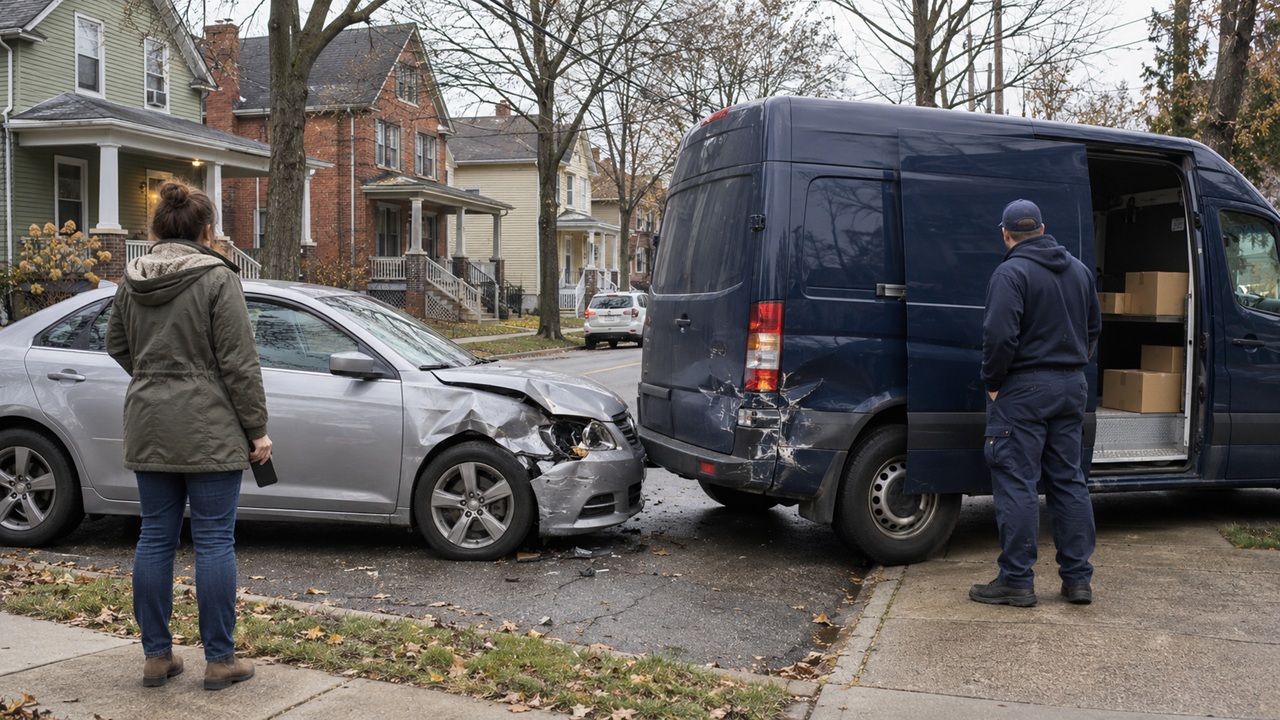
Cleveland crashes involving Amazon, UPS, and FedEx delivery vehicles have become a growing concern. More packages land on more porches every day. Brown trucks and Amazon and FedEx vans now crowd neighborhood streets in Ohio City, Tremont, Detroit-Shoreway, and Slavic Village. They're just as busy in Lakewood, Parma, and the Heights. Their drivers stop often, double-park, and race to finish long routes on tight schedules.
When one of those vehicles causes a crash, the name on the side doesn't settle who pays. The driver may work directly for the delivery company. They may work for a separate contractor that only delivers for that company. Others are independent drivers using their own cars. Each setup points to a different insurance policy.
Sorting that out quickly can make a big difference in what an injured person recovers. A Cleveland car accident lawyer can identify who actually employed the driver and track down every policy that may apply. That lawyer can also preserve evidence before the delivery company's records disappear.
|
Who Usually Employs the Driver
|
Why Delivery Crashes Are So Common on Cleveland Streets
Delivery drivers face pressure that most drivers never feel. Many have dozens or even hundreds of stops to make in a single shift. That pressure can lead to rolling stops, sudden U-turns, and quick backing maneuvers on narrow side streets. Drivers often stop in travel lanes or double-park when there's nowhere else to go.
Busy corridors like Lorain Avenue, Detroit Avenue, and Euclid Avenue add even more risk. Delivery vans pull in and out of traffic near parked cars, bike lanes, and crosswalks. Pedestrians stepping out from between parked cars are especially vulnerable. So are cyclists riding near the curb when a driver is focused on the next address.
Cleveland winters and the holiday rush make things worse. Snow narrows already tight streets, and package volume climbs sharply from Thanksgiving through New Year's. Seasonal drivers with little experience often join the routes just as conditions get the most dangerous.
UPS Drivers Are Usually Company Employees
Most UPS package delivery drivers are employees of UPS. That matters because Ohio, like other states, holds employers responsible for crashes their employees cause while doing their jobs. Lawyers call this rule respondeat superior, which simply means the employer answers for the employee's actions on the job.
In practice, a claim after a crash with a UPS driver usually goes against UPS itself. That can be good news, since a large company has the resources to pay a serious claim. It also means facing a claims department with years of experience defending crash cases.
UPS may still argue that its driver wasn't at fault or that the injured person shares the blame. Evidence from the truck's onboard technology, the driver's route records, and nearby cameras can be critical. Getting that evidence quickly is often the difference between a fair result and a lowball offer.
FedEx Ground Uses Contracted Service Providers
FedEx runs more than one delivery network, and the difference matters after a crash. Drivers for FedEx Express are generally FedEx employees. Most FedEx Ground deliveries, including many home deliveries, are handled by independent businesses called contracted service providers. Those businesses hire their own drivers and carry their own commercial insurance.
When a FedEx Ground driver causes a crash, the claim usually starts with the contractor and its insurance company. FedEx may argue that it isn't responsible because the driver didn't work for it directly. That can leave injured people bouncing between companies while each one points to the other.
Identifying which network the truck belonged to is one of the first steps in these cases. Logos, truck markings, and the driver's employer all help answer that question. A lawyer can determine whether the contractor, FedEx, or both may be responsible for the crash.
Amazon DSP and Amazon Flex Drivers Work for Separate Companies
Many of the blue Amazon-branded vans on Cleveland streets aren't driven by Amazon employees. They're driven by employees of Delivery Service Partners (DSPs). These are separate companies that contract with Amazon to handle deliveries. DSPs carry their own commercial auto insurance, and that policy is usually the first source of payment.
Amazon Flex works differently. Flex drivers are independent contractors who use their own cars to deliver packages. According to the Amazon Flex safety page, Amazon's commercial auto policy includes $1,000,000 in auto liability coverage. That coverage generally applies only while the driver is actively delivering during a scheduled block.
That creates gaps that can catch injured people off guard. A Flex driver's personal insurance may refuse coverage for business use. Amazon's coverage may not apply if the driver wasn't on an active block. In those situations, an injured person's own uninsured or underinsured motorist (UM/UIM) coverage can become an important backup.
Delivery Driver Crashes at a Glance
Each delivery company sets up its driver relationships differently. Here's how those differences usually affect whose insurance pays and where disputes tend to arise.
| Company | Driver's Relationship | Whose Insurance Usually Applies | Common Disputes |
|---|---|---|---|
| UPS | Company employee | UPS | Fault and shared blame |
| FedEx Express | Company employee | FedEx | Fault and shared blame |
| FedEx Ground | Employee of an independent contractor | The contractor's commercial policy | Whether FedEx shares responsibility |
| Amazon DSP | Employee of a separate delivery company | The DSP's commercial policy | Whether Amazon's coverage also applies |
| Amazon Flex | Independent contractor in a personal car | Amazon's policy during active deliveries, or personal insurance | Whether the driver was on an active block |
These patterns are a starting point. The specific facts of a crash, including what the driver was doing at the time, can change the answer. That's why the early investigation matters so much in delivery vehicle cases.
How Ohio's 50% Rule Applies
Ohio follows a modified comparative fault rule under Ohio Revised Code 2315.33. An injured person can recover compensation as long as he or she is 50% or less at fault. Any award is reduced by that person's share of the blame.
Delivery companies and their insurance companies know this rule well. They may claim the injured driver was speeding, following too closely, or should have seen a stopped van. Pedestrians may be told they stepped into the street without looking. Each of those arguments is aimed at pushing the injured person's share of fault higher.
Strong evidence can push back. Video, vehicle data, and the delivery company's own records often show what really happened. With the right proof, the focus stays on the driver who caused the crash and the company behind that driver.
Evidence That Matters in a Delivery Vehicle Crash
Delivery vehicles create a detailed record of where they go and what they do. That record can be powerful evidence, but much of it can be overwritten or lost quickly.
- Telematics and GPS Data – Many delivery vehicles track speed, braking, and location throughout the route.
- Route and Scan Records – Package scan times can show where the driver was and how rushed the schedule was.
- In-Vehicle Cameras – Many delivery vans carry cameras that record the road ahead and sometimes the driver.
- Training and Safety Records – These records can show whether the company or contractor properly trained the driver.
- Nearby Video – Doorbell cameras, business cameras, and traffic cameras on Cleveland streets may have captured the crash.
Delivery companies control most of this evidence, and they aren't in a hurry to share it. A lawyer can send formal demands to preserve it before it's erased. Acting in the first few days often decides whether that proof is still available.
Steps to Take After a Delivery Vehicle Crash in Cleveland
The moments after a crash with a delivery vehicle can shape the entire claim. These steps help protect both health and the evidence.
- Get Medical Care – Some injuries don't show symptoms right away, and medical records document the harm.
- Call the Police – A Cleveland police report records the scene, the driver, and the vehicle involved.
- Photograph the Vehicle – Capture the logos, truck markings, license plate, and any company name or U.S. Department of Transportation (USDOT) number.
- Write Down the Driver's Employer – Ask who the driver works for, since it may not match the logo on the van.
- Collect Witness Information – Neighbors, customers, and other drivers can confirm what happened.
- Avoid the Delivery Company's Insurance Company – Don't give statements or sign anything, and send all contact to a lawyer.
Ohio generally allows two years to file a personal injury lawsuit under Ohio Revised Code 2305.10. The evidence in a delivery crash can vanish long before that. Talking with a lawyer early keeps every option open.
Make My Team Your Team After a Delivery Crash
Merriman Legal, LLC represents injured people across Cleveland and throughout Ohio. Founding partner Tom Merriman knows what crash victims go through firsthand. His daughter, Kiki, was hit by a car while riding her bike and has needed multiple surgeries. Tom is also an Emmy Award-winning legal analyst who breaks down Ohio law for Cleveland viewers.
After you contact us, our Rapid Response Team can go to work within 24 hours. We preserve physical evidence, track down witnesses, and identify cameras that may have recorded what happened. That speed matters in delivery cases, where company data and video can disappear fast.
Hit by an Amazon, UPS, or FedEx driver? Make my team your team and let us start building your case today.
"I appreciate everything that he has done. I truly feel justified. Can never thank him enough for what he's done for us. Truly a blessing from God. Rate him 10 stars!" - Marvin C., ⭐⭐⭐⭐⭐