
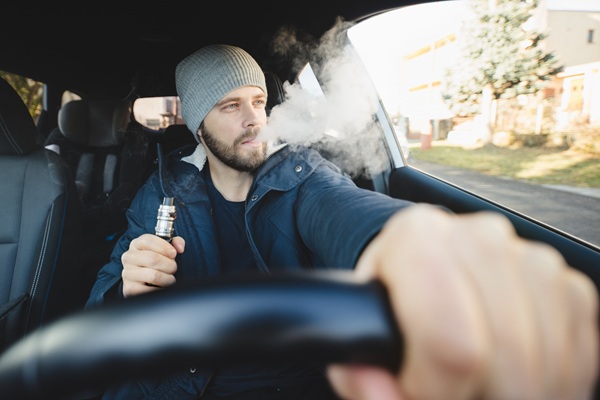
When impaired drivers get behind the wheel, the consequences can be devastating
The debate about marijuana and driving has been rolling along for years, but a new study out of Ohio suggests the issue may be far more serious than many people realize.
As cannabis becomes increasingly accessible, a growing body of research is revealing that while marijuana may help people unwind, getting behind the wheel afterward can lead to serious and potentially fatal car accidents.
A research team led by Dr. Akpofure Ekeh at Wright State University examined coroner records from Montgomery County, Ohio, covering January 2019 through September 2024.
Because the state legalized recreational marijuana in 2023, the study offered a rare chance to evaluate how legalization might influence THC involvement in deadly crashes. Coroners typically draw blood within hours of death, giving investigators a clear picture of whether a driver had recently consumed cannabis.
What did the research on THC reveal?
The findings were striking. Out of 246 drivers killed in crashes, more than 40 percent tested positive for active THC. The annual numbers fluctuated but remained consistently high, with THC positivity ranging from about 26 percent to nearly 49 percent. Positivity rates barely changed after legalization (42.1 percent before and 45.2 percent after). This suggests that those inclined to drive after using cannabis were doing so regardless of the law.
It wasn’t just the presence of THC that caught researchers’ attention. It was the amount. Drivers who tested positive had an average THC concentration of 30.7 ng/mL. For perspective, most states consider drivers impaired at levels between 2 and 5 ng/mL.
Dr. Ekeh said he was stunned by the findings, emphasizing that these high levels point to recent use, not leftover traces from days before. “This isn’t residual use,” he explained. “It’s about consumption close to the time of driving.”
How does THC affect driving ability?
THC affects several brain functions that are critical for safe driving, including attention, coordination, judgment, and reaction time. Even when drivers feel “okay,” research shows measurable impairment in how smoothly they steer, how quickly they respond to hazards, and how well they divide attention between multiple tasks on the road.
Here is how THC commonly affects driving ability:
- Slower reaction time: This makes it harder to brake or swerve quickly when traffic suddenly stops or a hazard appears.
- Poor lane control: This includes increased “weaving” within the lane and trouble maintaining a steady lateral position on the road.
- Impaired coordination and motor control: This can affect steering precision, braking smoothness, and the use of pedals.
- Reduced attention: Divided-attention skills make it harder to track multiple stimuli simultaneously, such as traffic lights, mirrors, pedestrians, and navigation directions.
- Distorted perception: Distorted perception of time, distance, and speed can lead to misjudging how fast other cars are moving or how much space is needed to merge or stop safely.
- Increased mental effort: This makes drivers feel they must “work harder” to stay in control, which can be exhausting on longer trips.
What the results mean for public safety
As cannabis becomes more normalized, many people underestimate its impact on driving, even though impairment can be similar in seriousness to alcohol. While alcohol messaging is clear and consistent, many cannabis users still believe driving “a little high” is safe or even think it improves their driving, which puts everyone on the road at risk.
The study doesn’t settle every question about cannabis and driving, but it sheds light on an urgent need for more health education and more awareness about impairment. For the families of the drivers who appeared in this study, it’s a reminder that one moment of misjudgment can change everything.
Here are some ways to prevent car accidents linked to THC impairment:
- Treat driving high the same as driving drunk. Those who consume THC should plan a sober ride or stay where they are until they are no longer impaired.
- Never rely on “feeling fine” as a safety gauge; cannabis can impair judgment so that people underestimate how affected they are.
- Build a habit of planning ahead (designated driver, rideshare, transit) before using cannabis, especially at social events or on weekends.
- Support stronger, clearer public health campaigns that state plainly that driving high is driving impaired, and it increases crash risk.
- Encourage conversations with teens and new drivers about cannabis and driving, just as families already do with alcohol.
Injured in a crash? Contact Merriman Legal today
If an impaired driver turned an ordinary day into a life-changing moment, you deserve a legal team that knows how to protect your rights and push back against the insurance companies.
At Merriman Legal, LLC, we've built our reputation by standing up for people hurt in drug-impaired driving crashes across Cleveland and the surrounding communities. Our attorneys know how overwhelming the aftermath can feel, and we’re here to take that weight off your shoulders so you can focus on healing.
Your first step is simple: schedule a free consultation. We’ll take the time to listen to your story, answer your questions, and explain what comes next. There’s no cost to talk with us and no obligation to move forward.
We also work on a contingency fee basis, so you don’t pay us anything up front. That means you can get powerful legal support without worrying about upfront expenses. Our legal team will investigate the crash, gather evidence, deal with the insurance company, and fight for the full compensation you deserve.
If you were hurt anywhere in Northeast Ohio, contact us online or call for a free consultation. The sooner you reach out, the sooner we can protect evidence, stop the insurance company from taking advantage of you, and start building your case.
"Tom was extremely knowledgeable and made the process as smooth as possible. He’s very easy to work with and takes the time to explain all of the details, no matter how small. I would highly recommend him and the firm." ─ Alicia, ⭐⭐⭐⭐⭐